Tools for Better Sounding Studios.
Plan your speaker position, understand your room acoustics, and make smarter treatment decisions — using practical tools built on acoustic engineering.
What can you do here?
Plan your speaker & listening position
The fastest way to a better-sounding room: a labeled starting-point layout for your monitors and chair, with a live diagram you can adjust. No account, no paywall, calculated instantly from your real room.
FreeDig into room problems
Once your speakers are placed: the Room Mode Calculator and RT60 Calculator find the resonances and reverberation your room's dimensions actually produce.
Own itBuy detailed studio tools
The complete Studio Acoustic Toolkit: every calculator plus guides, checklists, and a worked example, as an editable spreadsheet system you own.
PersonalGet a personal studio analysis
When the free tools aren't enough: a Quick Room Report, a Personal Studio Analysis, or a Complete Studio Consultation, based on your specific room.
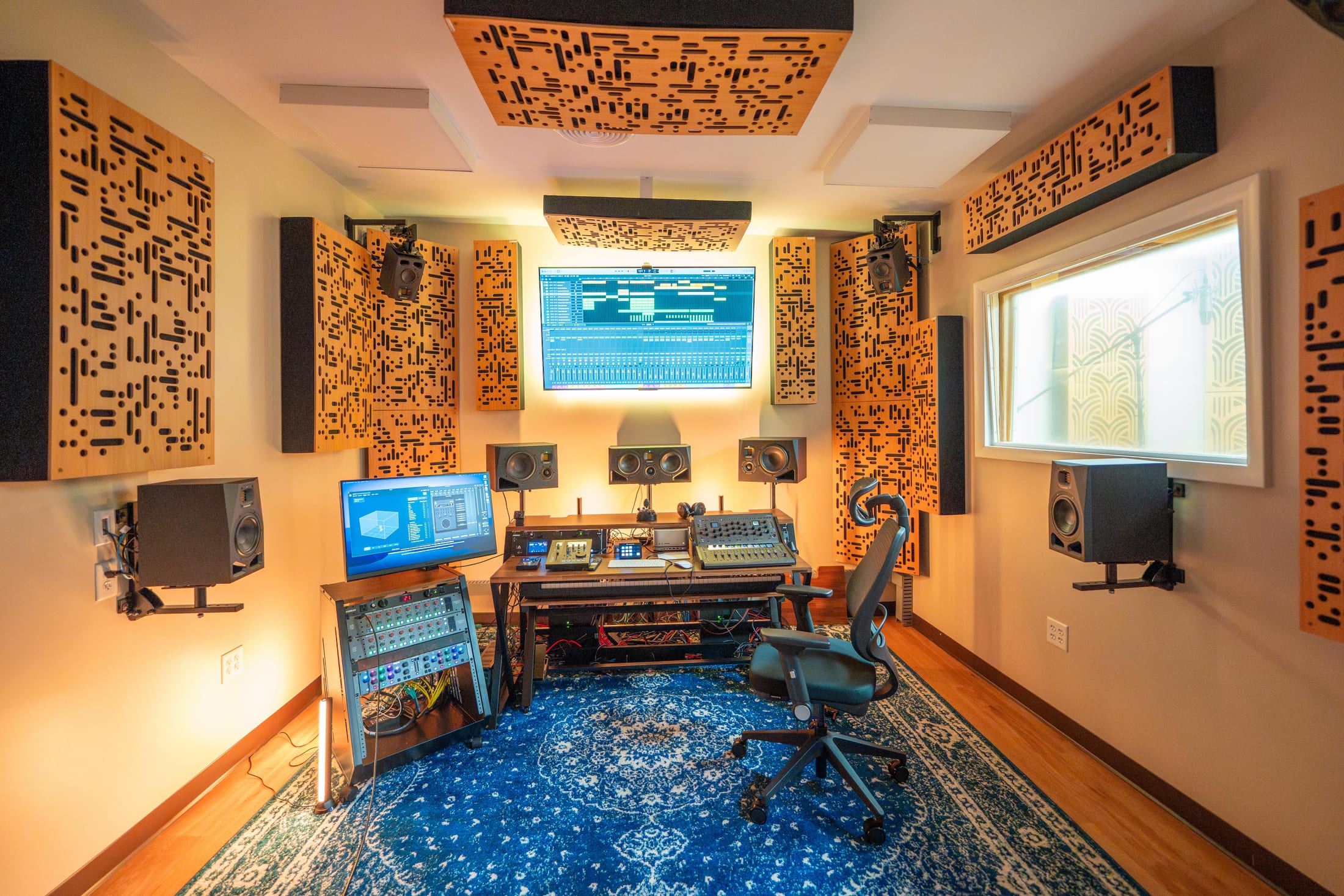
Acoustics × music production. Professional acoustic knowledge, translated into practical studio tools by someone who also produces and DJs — not a generic calculator site, not a corporate consultancy. More about the founder →
Track Analyzer: know what's wrong with your mix before you master it
Upload a WAV or AIFF and get plain-English feedback on loudness, dynamics, clipping, stereo width, and frequency balance — free, no account needed.
Analyze My TrackThe order that actually matters
Speaker and listening position come first — they're free to change and make the biggest audible difference. Room modes, reflections, and treatment are the detailed technical layer underneath, not the first thing to worry about.
- 1
Speaker & listening position
Where your monitors and chair go. Free, two minutes, the biggest impact for the least effort.
Plan placement → - 2
Room problems
Which resonant frequencies (room modes) and reverberation your room's exact dimensions produce.
Check room modes → - 3
Reflections & treatment
First-reflection points and boundary interference, then a full panel/bass-trap plan.
See the Toolkit →
From the blog
Bass Trap Placement: Where They Actually Belong (and Why)
Why bass traps go in corners, how many you actually need, and why they matter more than broadband foam for a boomy or inconsistent low end.
First Reflection Points Explained (and How to Find Yours)
What first reflection points are, why they matter more than most treatment guides admit, and the mirror trick that finds them for free.
Home Studio Acoustic Treatment: The Complete Starting Guide
Everything you need to know before treating a home studio: what's actually wrong with small rooms, what treatment does, and a realistic order of operations.
Home Studio Setup Checklist: The Acoustic Steps, In Order
A practical, step-by-step acoustic setup checklist for a home studio — from measuring your room to verifying your treatment actually worked.